Where to Eat in Georgetown: A Local's Guide
Georgetown is expensive, crowded, and worth knowing how to navigate. A local's breakdown of where the food actually holds up.
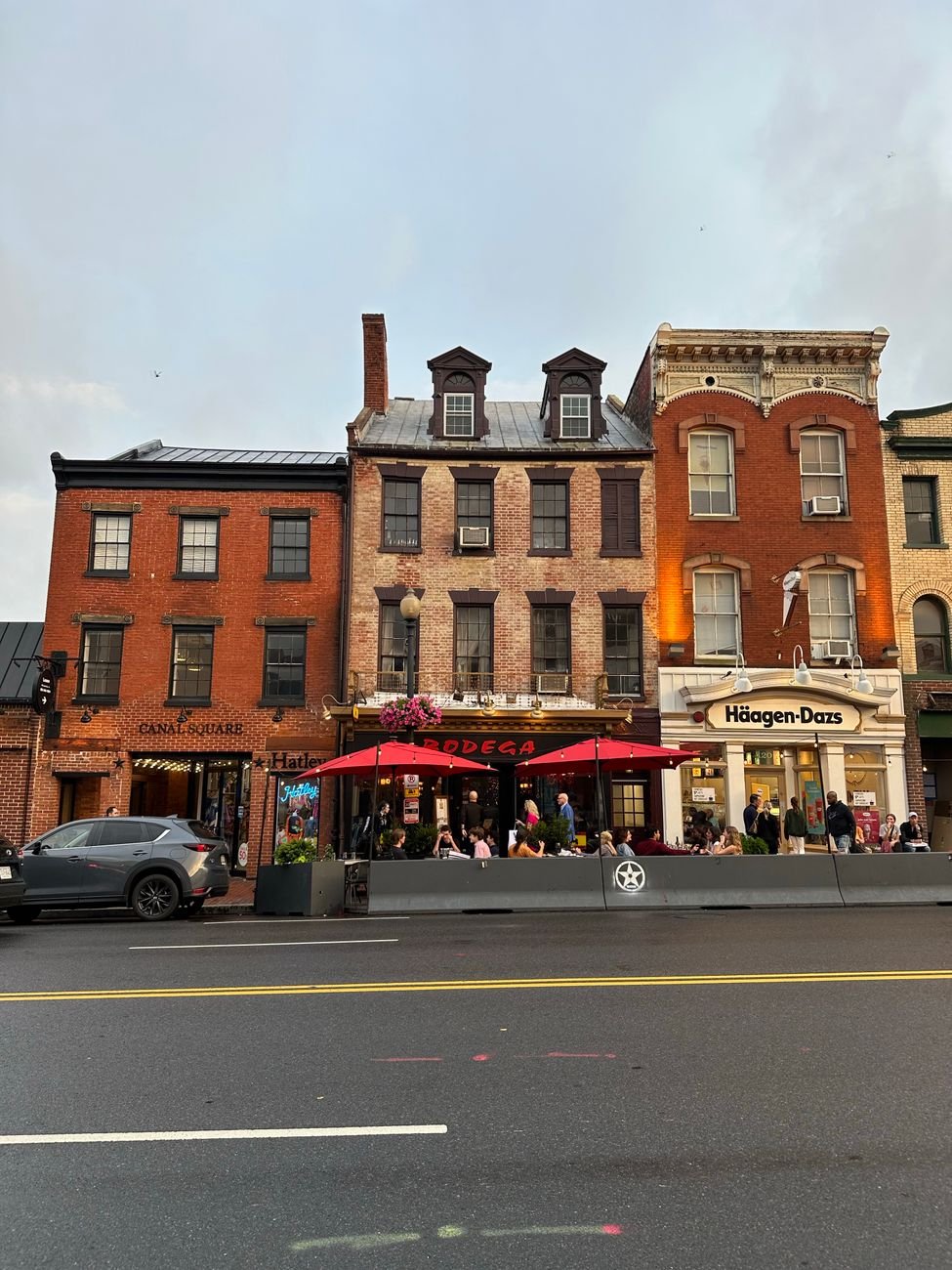
The cobblestones on N Street will wreck your ankles if you're not paying attention, and that's a reasonable metaphor for eating in Georgetown: the neighborhood looks beautiful, draws enormous crowds, and will absolutely get you if you're not careful. Knowing where to eat in Georgetown is less about having a list and more about understanding how the place works, who it's built for, where the value hides, and which corners of the waterfront and upper Wisconsin actually reward a visit.
Georgetown is old money made permanent in brick. It predates the city grid, it never got a Metro stop (a deliberate choice by residents who didn't want the crowds), and it has spent decades being equally beloved by tourists, Georgetown University parents, and Ward 2 lifers who remember when M Street was less of a retail corridor. The food scene reflects all of that: there are genuinely excellent restaurants here, but they sit alongside a lot of places banking on foot traffic and a picturesque backdrop to carry them.
How to Eat Well: Where to Eat in Georgetown
The first rule is to get off M Street. The main drag between Georgetown University and the bridge into Foggy Bottom runs hot with pedestrian traffic and the restaurants along it know it. Some are fine; many are coasting. The better move is to walk a block or two north toward the residential streets, or to commit to the waterfront rather than hovering somewhere in between.
The second rule is lunch over dinner when possible. Dinner prices here reflect the zip code and the reputation. The same kitchens, at midday, often offer a better value. For a local taking out-of-town guests somewhere atmospheric, a long Georgetown lunch, especially in good weather near the canal or on the waterfront terrace of one of the river-facing restaurants, gets you the scenery without the prix-fixe damage.
The third rule: walk up Wisconsin. M Street gets the attention but upper Wisconsin Avenue, past the university and into the blocks that feel more like a proper neighborhood, has dining that caters less to day-trippers. The further you walk from the main commercial intersection, the more the clientele shifts to people who actually live nearby.
What Georgetown Does Well
The waterfront is the neighborhood's strongest card. The stretch along the Potomac, particularly around the Washington Harbour complex, offers outdoor dining with a legitimate view: the Kennedy Center across the water, boat traffic on the river, actual skyline. It is unambiguously the most pleasant place to eat in this part of DC on a good-weather evening if you don't mind the prices. Seafood makes sense here. So does anything you can eat slowly with a drink while watching the river.
The neighborhood also does well by its French and European traditions. The neighborhood has had a long relationship with classical continental cooking, and there are places along the side streets and near the C&O Canal that have been running the same bistro formula for decades. The longevity is meaningful. A restaurant that has survived multiple economic cycles in Georgetown's rent environment is doing something right.
Weekend brunch deserves a mention too: Georgetown on a Sunday morning before the crowds arrive, before 10 a.m., when the light hits the old rowhouse facades and the canal is quiet, is one of the city's genuinely lovely tableaux. Eating at that hour, before the tour buses and the shopping crowds come through, is when the neighborhood feels most like itself.
What to Skip
Any place with a promotional board on the sidewalk facing foot traffic deserves scrutiny. That's not a rule unique to Georgetown, but it applies especially here, where the margin between a restaurant worth your time and one monetizing a location is sometimes invisible until you're already seated.
Chain restaurants at Georgetown prices are a particular trap. You will pay a significant premium for the same experience you could have anywhere, with the Georgetown cobblestone atmosphere doing the heavy lifting. The neighborhood has enough genuinely independent options that there's no reason to settle.
Late-night eating is also a weak spot. Georgetown's residential character and its complicated relationship with nightlife means the late-night food options are sparse and largely aimed at university students. Fine if that's the mission. Otherwise, plan accordingly.
A Few Practical Notes
- Parking is genuinely difficult on weekends. Arriving from Capitol Hill or Columbia Heights, take the DC Circulator or a car-share drop on the Potomac side to save the headache.
- The C&O Canal towpath runs alongside some of the neighborhood's older restaurant blocks. Eating near the canal and then walking the towpath west is one of the better afternoon itineraries in the city.
- Reservations matter more here than in most DC neighborhoods on weekend evenings. The better places fill up with a mix of locals, tourists, and university-adjacent visitors. Same-day walk-ins are possible at lunch far more than dinner.
- If you're already up the hill near the university, the options thin out and the audience skews young. Fine for a casual meal, but adjust expectations accordingly.
Where Georgetown Sits in the City
DC has better food neighborhoods. Shaw's 14th Street corridor, the Ethiopian corridor along 9th Street NW, H Street, and the Wharf all offer more concentrated quality-to-price ratios. Its value is specific: the physical setting, the historic architecture, the waterfront access. When the food is good here, it's partly because the setting earns it.
That's not a dismissal. It's context. Locals who avoid Georgetown entirely are missing something real, the canal walk, the river view, the particular feeling of eating well in a neighborhood that looks like no other part of the city. But arriving without a sense of how to navigate it means you're eating for the tourists, not for yourself.
The best Georgetown meal for a local is usually a deliberate one: a specific restaurant chosen in advance, a reservation in hand, a table with a view of the water or the old brick alley, and no expectation that you'll discover something spontaneously by walking in off M Street. Georgetown rewards intention. Treat it like a destination meal rather than a neighborhood wander, and it delivers. Show up hoping to stumble into something good and the neighborhood will reliably collect its tourist tax.