Things to Do in Georgetown Worth Exploring
A Capitol Hill local's honest walk through Georgetown's canal, campus, gardens, and waterfront, past the shopping bags and the ghost stories, to what actually makes the neighborhood worth a full day.
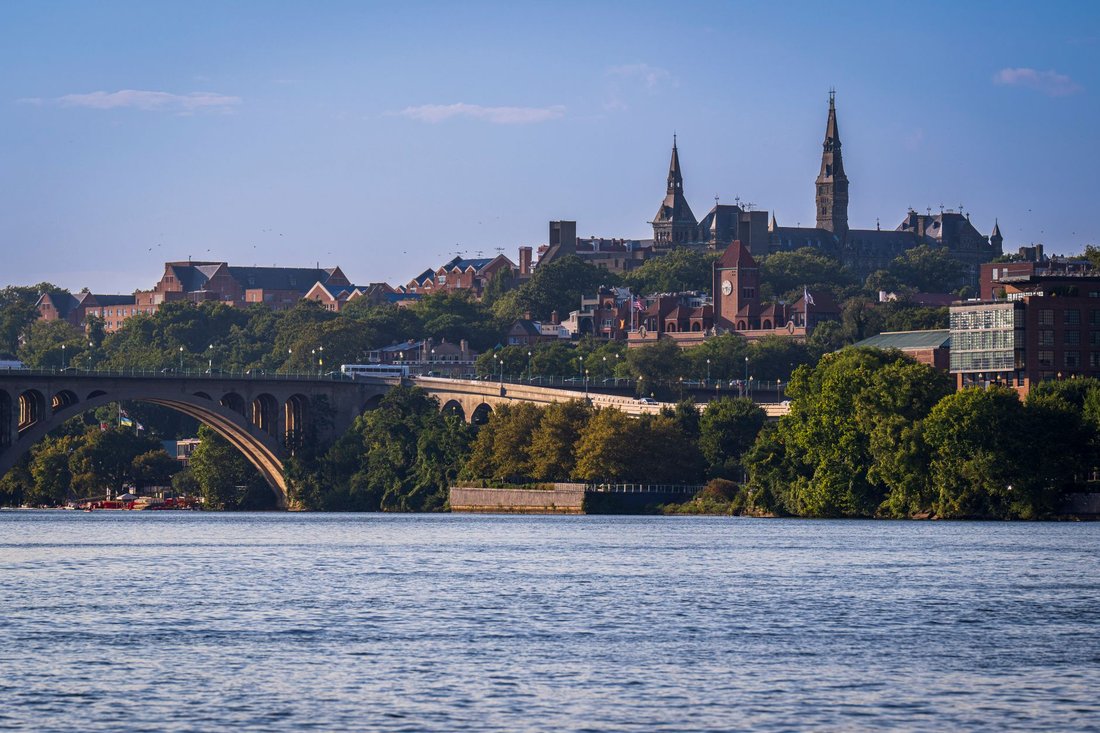
Six-thirty on a weekday morning, the C&O Canal towpath in Georgetown belongs to joggers, dog walkers, and a great blue heron that has staked out the same stretch of water near Thomas Jefferson Street for as long as anyone in the neighborhood can remember. Nobody down here is photographing a monument. This is Ward 2, a walkable slice of the city that predates the federal government built up around it by decades, and most searches for things to do in Georgetown assume the answer starts and ends with boutiques on M Street. That part is real enough, but the neighborhood also holds a working two-hundred-year-old canal, a university campus with its own ghost story, two historic estates worth a slow afternoon, and a waterfront that shifts character completely between breakfast and last call. What follows comes from actually walking these blocks on repeated visits over twenty years of living a few miles away, not from a rental car window on the way to somewhere else. It covers the canal, the campus, two historic estates, a public library with its own archive, and the water, roughly in the order a good day here would actually unfold.
Things to Do in Georgetown Along the Water
The Potomac shoreline is where Georgetown's working past and its weekend present sit closest together, and it is the natural starting point for anyone planning a day here.
C&O Canal National Historical Park
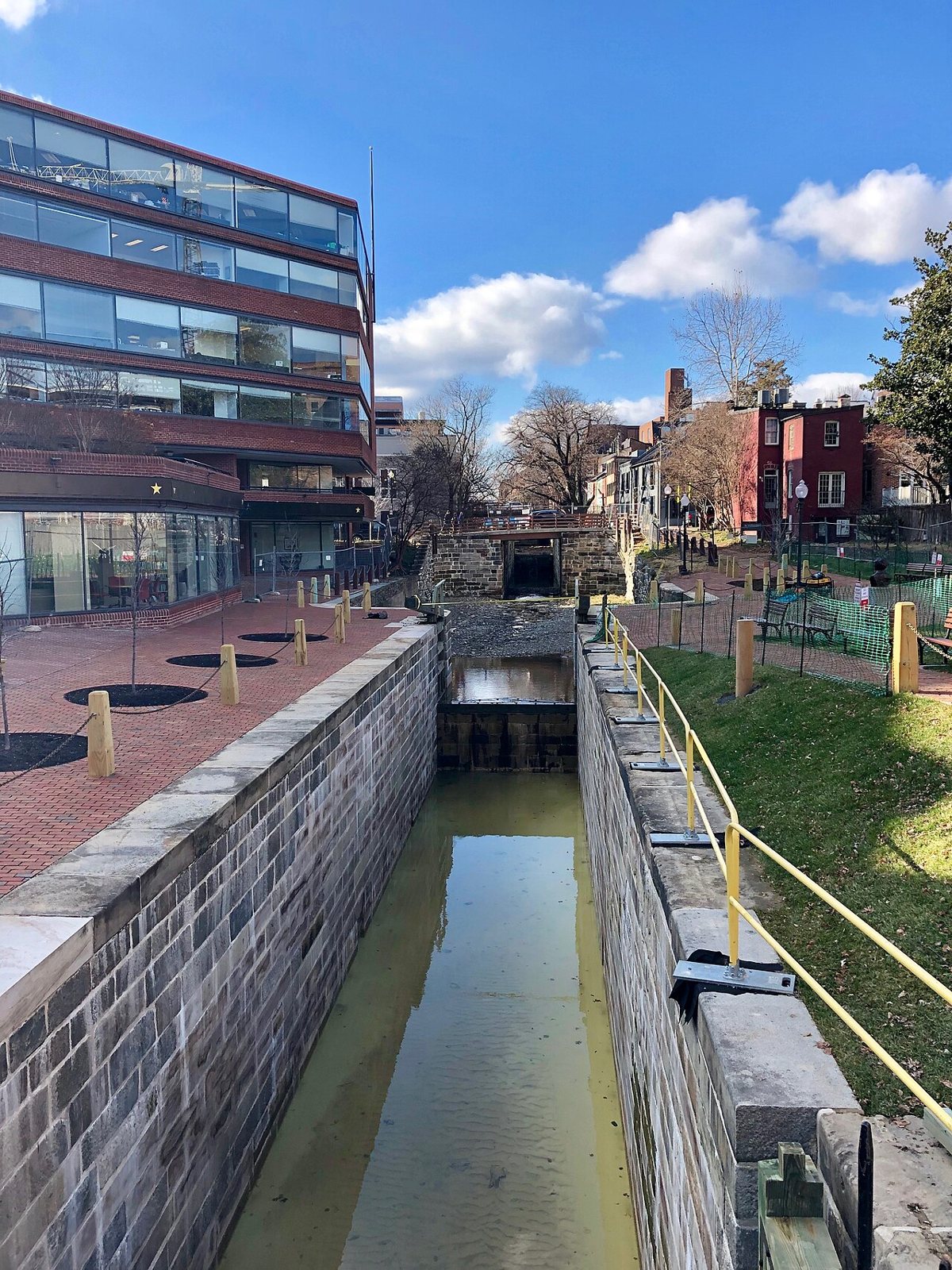
The canal starts its 184-mile run to Cumberland, Maryland right here at the foot of Wisconsin Avenue, and this stretch is the busiest and best preserved section in the city. Built in the 1830s to haul coal and flour past the river's rapids by mule-drawn barge, it operated commercially into the early twentieth century before becoming parkland. The towpath is flat, shaded, and easy for any fitness level, whether you are walking a mile round trip or pushing further past the lock houses toward Georgetown University. Watch for the mile-zero marker and the old lift locks, still intact. The insider move is going a mile or two past Wisconsin Avenue, where the crowds thin out fast and the canal starts to feel like the quiet industrial relic it actually is. Located along the waterfront, roughly between 30th and 33rd Streets. Bikes are allowed on the towpath, and renting one for an hour is a cheap way to cover more ground than walking allows, especially if the goal is reaching the quieter locks further out before turning back.

Georgetown Waterfront Park
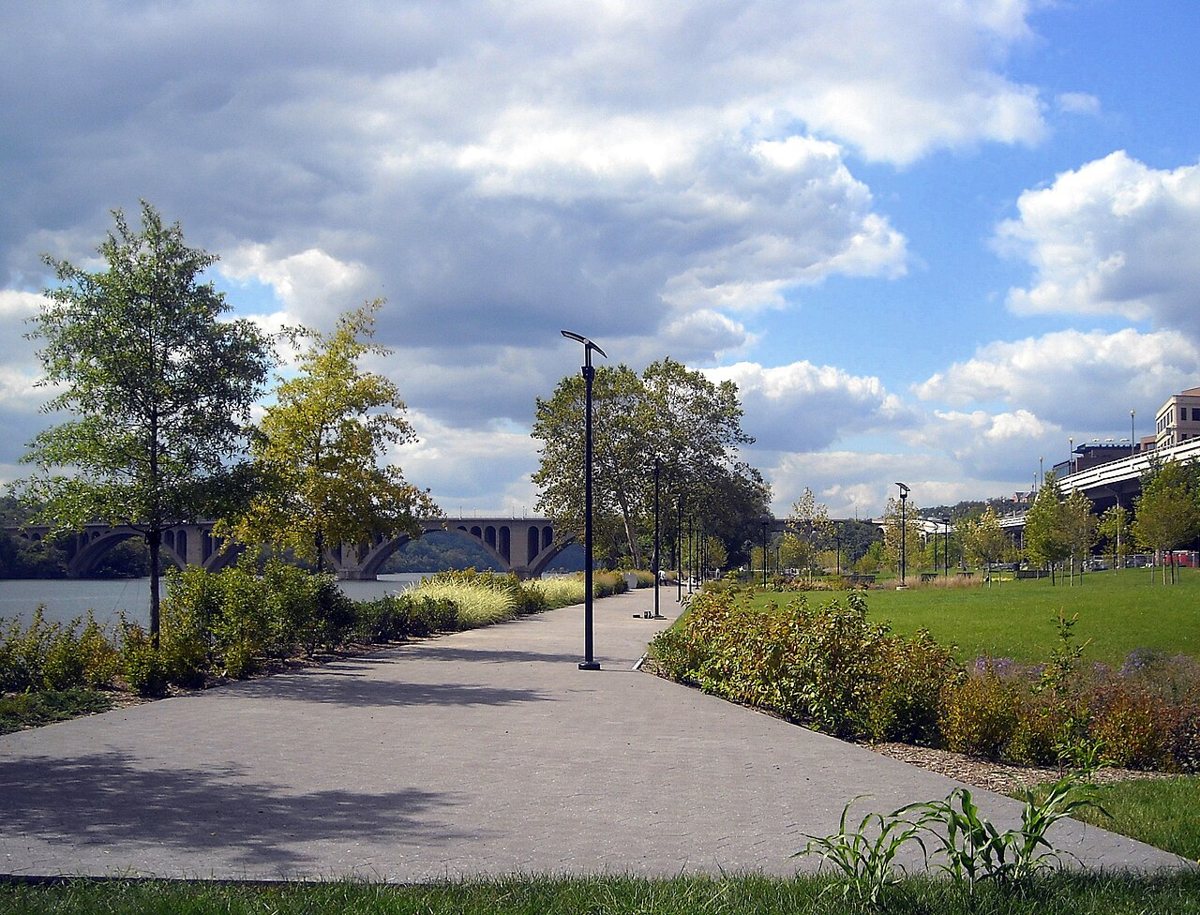
This National Park Service green space runs along the Potomac from the Key Bridge down past the harbor complex, and it functions as Georgetown's front porch. There is a stone labyrinth, a fountain plaza that turns into an informal splash pad for kids in summer, and long stretches of grass and benches with a straight view across to Roosevelt Island and, further down, the Kennedy Center on the Foggy Bottom side of the river. Rent a kayak or paddleboard from one of the launches nearby, or just walk the promenade and watch the rowing crews from Georgetown University run drills at dawn, oars cutting flat water before the rest of the neighborhood is awake. Go around sunset if you can. The light off the water and the Rosslyn skyline across the river is the best free show in the neighborhood. It sits directly below M Street, at the bottom of the hill, and connects on foot to both the canal towpath and Washington Harbour without ever forcing you back up onto the sidewalk.

Washington Harbour
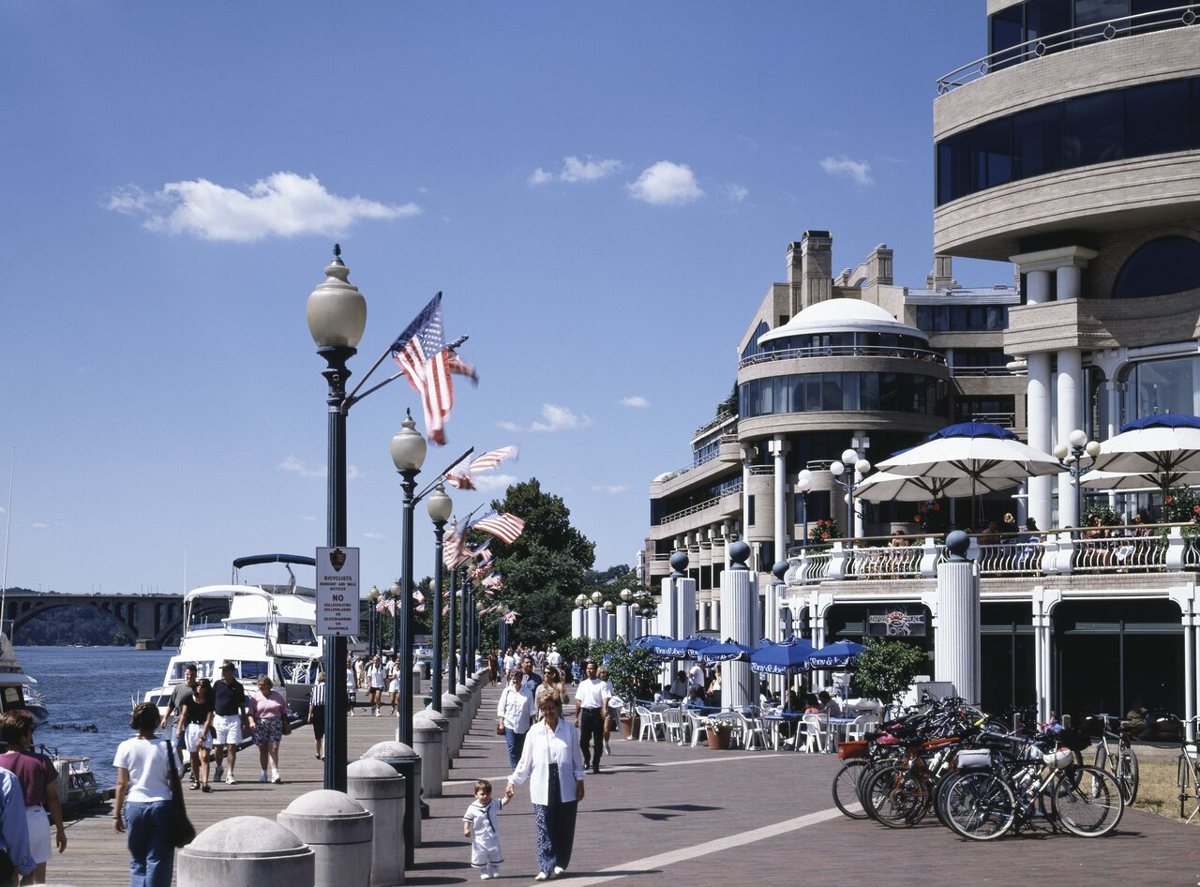
A short walk east along the water, this is the big glass-and-limestone development with the fountain plaza that everyone in DC recognizes from photos, mostly because it does double duty as an ice rink in winter and a flood-prone stage for Potomac overflow in the wetter months, complete with the flood wall markers that pop up when the river runs high. On a clear weekend afternoon the plaza fills with strollers, dogs, and people who came for a long brunch overlooking the water and never quite left. Restaurants here line up along the water with outdoor seating stacked two and three deep in warm weather, and it is one of the better spots in the city to watch boat traffic while you eat. Go on a weekday if you want a table without a wait, and go at dusk if you want the fountain lit up against the river. Boat traffic picks up noticeably on summer weekends, with everything from kayaks to the occasional yacht docking along the promenade.
Francis Scott Key Memorial Park
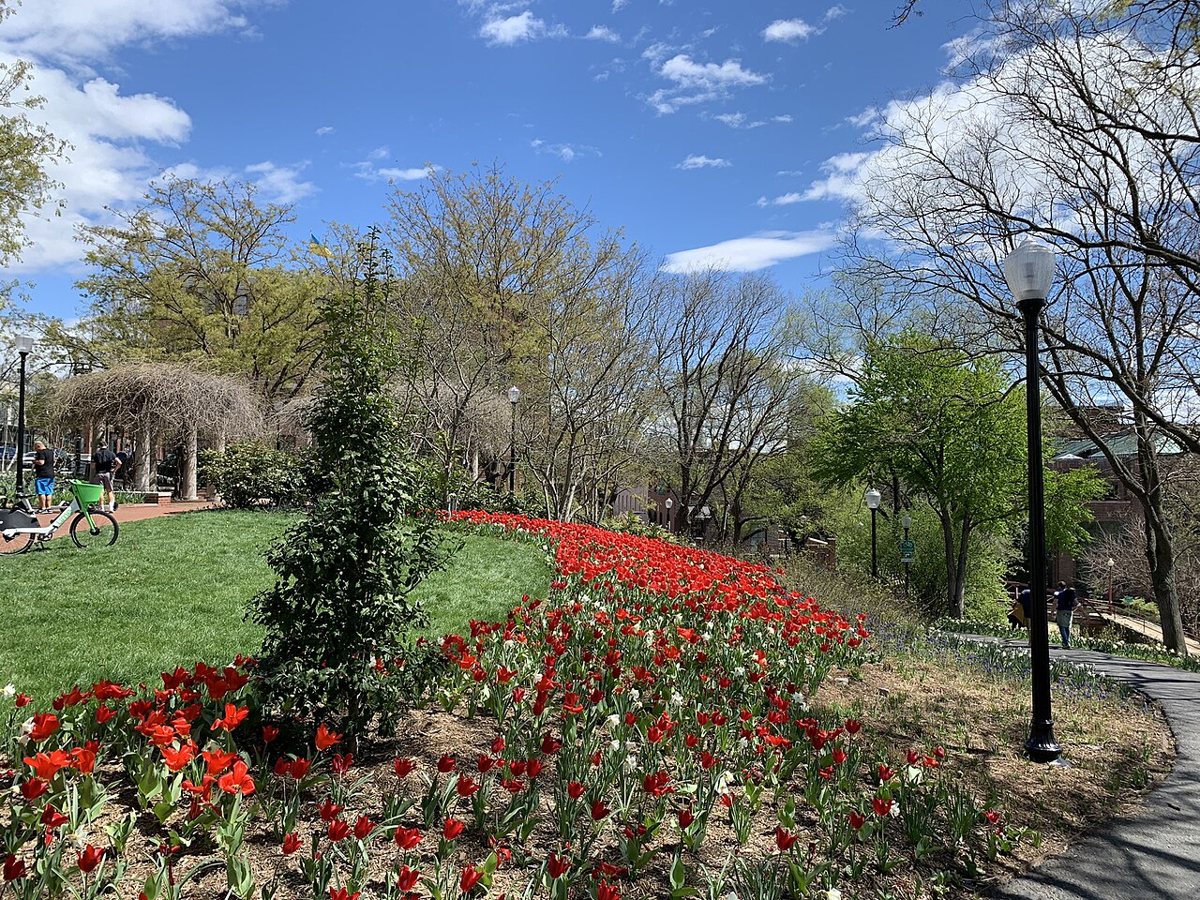
Tucked at the foot of the Key Bridge, this small triangular park marks the site where Francis Scott Key, author of the national anthem, once kept a house along the water before it was demolished for the bridge and highway ramps decades ago. What remains is a quiet, shaded pocket park with a stone pergola, a handful of benches, and a clear view up at the bridge traffic overhead. It rarely appears on anyone's list, which is exactly the point. After the crowds at the harbor or the canal, this is where you sit down for ten minutes and let your feet recover. It connects directly to both the canal towpath and the waterfront park, so it works well as a rest stop mid-walk rather than a separate destination, and it is one of the only spots in the neighborhood where you can hear the river over the traffic.

Georgetown University and Its Most Famous Staircase
Up the hill from the water sits one of the oldest universities in the country, and next to it, one of the more unusual pop culture landmarks in Washington. Both sit within a few minutes' walk of each other, so they work well as a single stop on any itinerary.
Georgetown University and Healy Hall
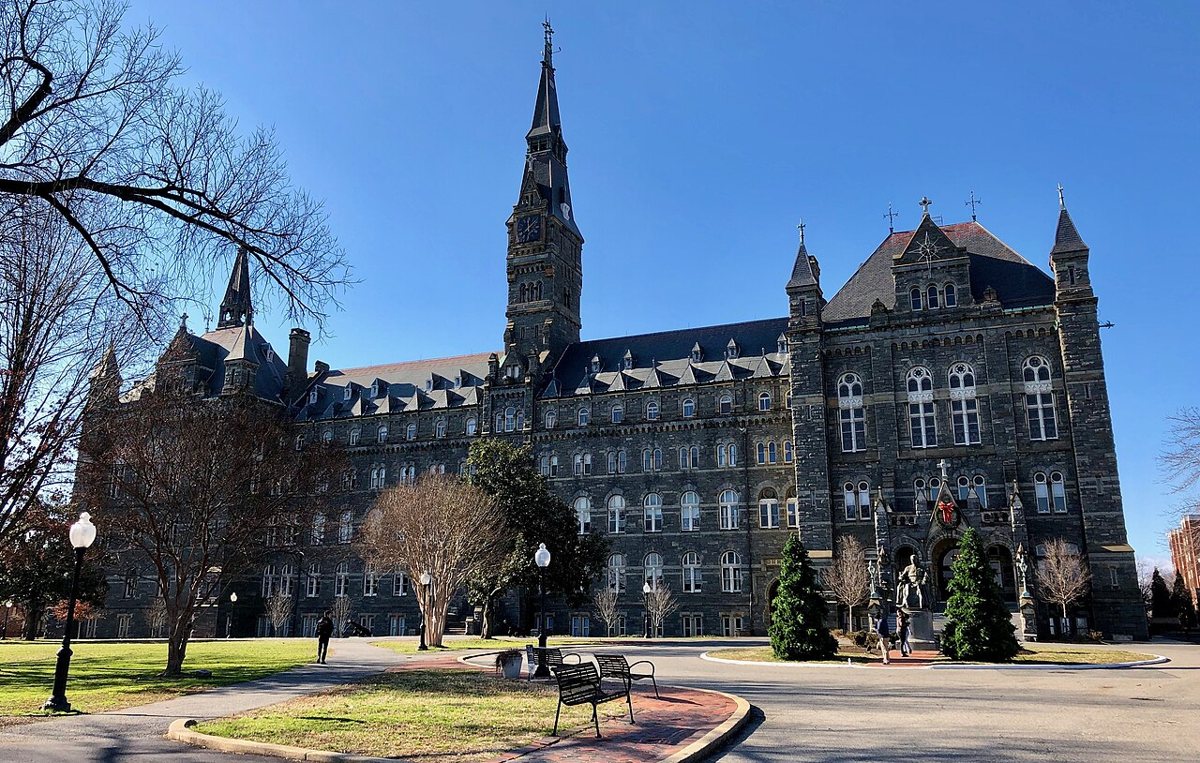
Founded in 1789, this is the oldest Catholic and Jesuit university in the United States, and its campus reads like a small European town dropped into a DC neighborhood. Healy Hall anchors the whole thing, a Flemish Romanesque building with a clock tower visible from the river and from parts of the canal towpath below. Inside is Riggs Library, a cast-iron Gothic reading room that looks like it was built for a much older institution than it actually is, and it remains one of the more photographed interiors on any American college campus. The campus gates at 37th and O Streets are open to the public during the day, and walking through costs nothing. Go in late afternoon when low sun catches the stone facade, and try to time a visit around the academic calendar, since the quads are livelier with students around and quieter, though still walkable, during breaks. The campus sits at the western edge of the neighborhood, a fifteen-minute walk up from M Street, and the front lawn in front of Healy Hall is open for anyone to sit on between classes.

The Exorcist Steps
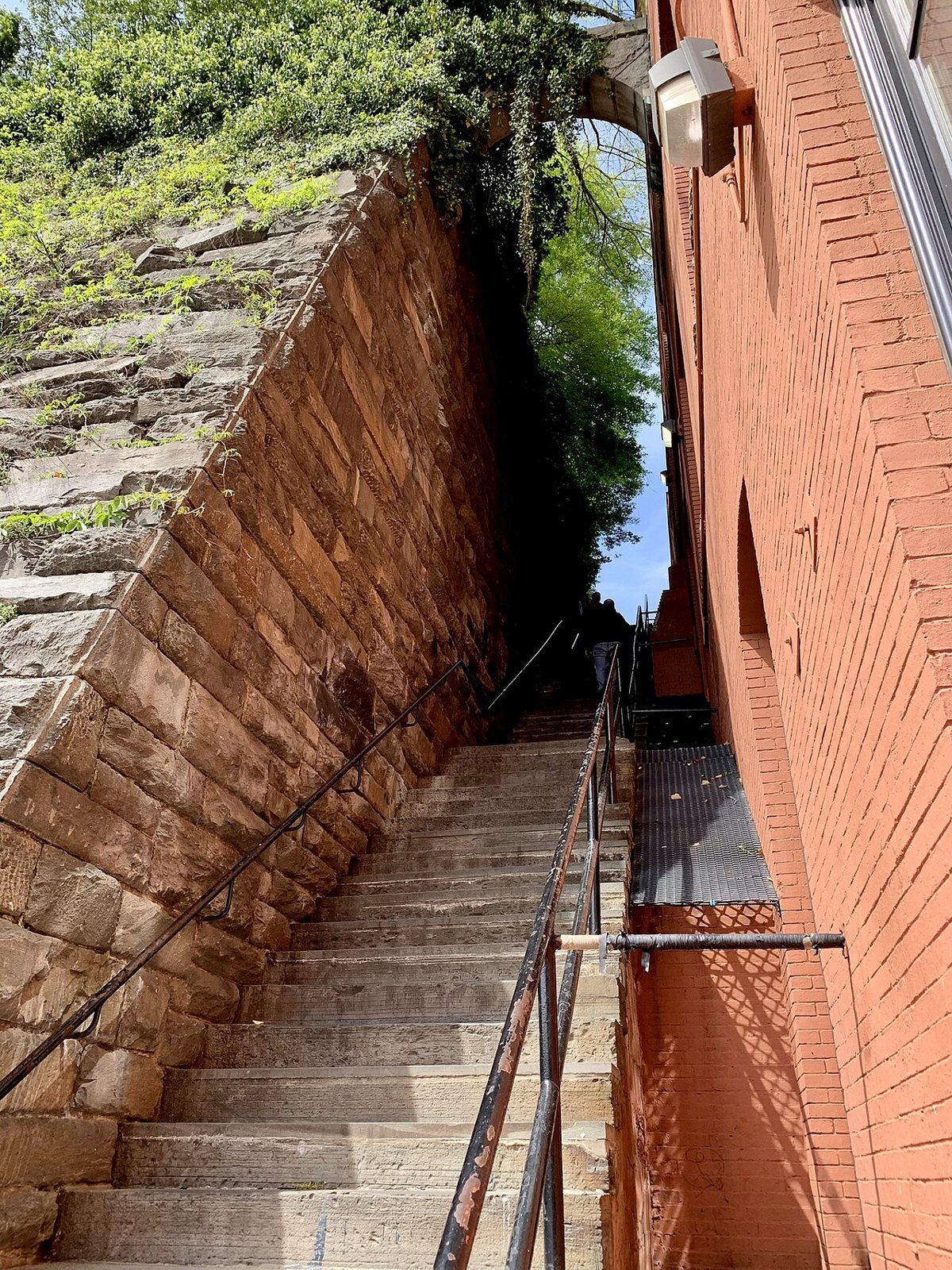
These steep stone stairs at the corner of 36th and Prospect Streets run straight down toward M Street and became famous after a stunt double tumbled down them in the 1973 film that shares their nickname. Locals use them as a genuine cardio workout, and a small plaque near the top now formally acknowledges what everyone already called them. There is nothing to buy and nothing to tour, just seventy-five steps and a story, but the view from the top toward the Potomac and the Whitehurst Freeway is worth the climb on its own. Early morning is the right time to go, before the tour groups and rideshares clog the narrow street at the bottom, and before the sun makes the climb back up considerably less fun. Some years, a costumed run down the steps happens around Halloween, so it is worth checking local listings if that season lines up with your visit.

History on the Side Streets
Away from the water and the campus, Georgetown holds four stops that reward anyone who actually cares about how this city came together before it was a capital, long before Washington existed as anything more than a plan on paper.
Old Stone House
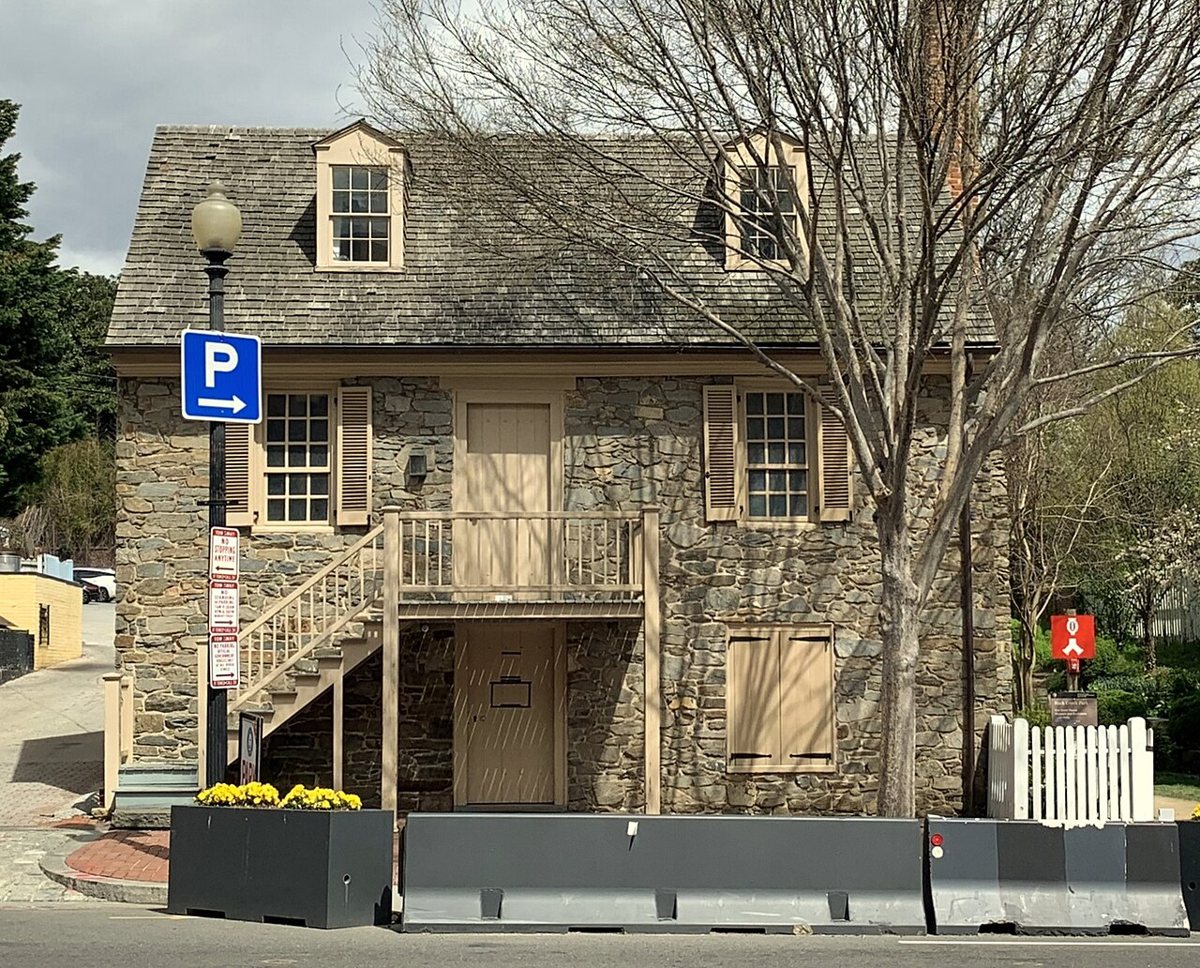
This is the oldest standing building in Washington, a modest fieldstone house built in 1765, more than two decades before the city itself existed. A persistent local myth once tied it to George Washington's surveying work; the truth is more ordinary and, honestly, more interesting: it was a working craftsman's house and shop, and it survived because nobody thought it was worth tearing down. The National Park Service runs it now as a free museum with a small colonial-era garden out back, right on the busiest block of M Street. Step inside for five minutes to see how modest colonial Georgetown actually was, then sit in the garden, which is one of the only quiet outdoor spots on that entire stretch of the street and a genuinely strange contrast to the retail noise on either side of it.

Dumbarton Oaks
Part research institute, part art museum, part ten-acre garden designed by landscape architect Beatrix Farrand, Dumbarton Oaks is where the 1944 conference that shaped the founding structure of the United Nations actually took place, a fact most visitors never learn until they are standing in the room. The museum holds serious Byzantine and pre-Columbian art collections, but the gardens are the real draw, terraced boxwood, a rose garden, an orangery, a wisteria-covered arbor, and paths that change completely by season. Check current hours before going, since the museum and garden run on separate schedules and the garden charges a small seasonal fee. Visit in spring for the blooms or in late fall for the color, and go on a weekday morning if you want the paths to yourself, since weekend slots can sell out during peak bloom. It sits above R Street, a few blocks north of the main commercial strip.
Tudor Place
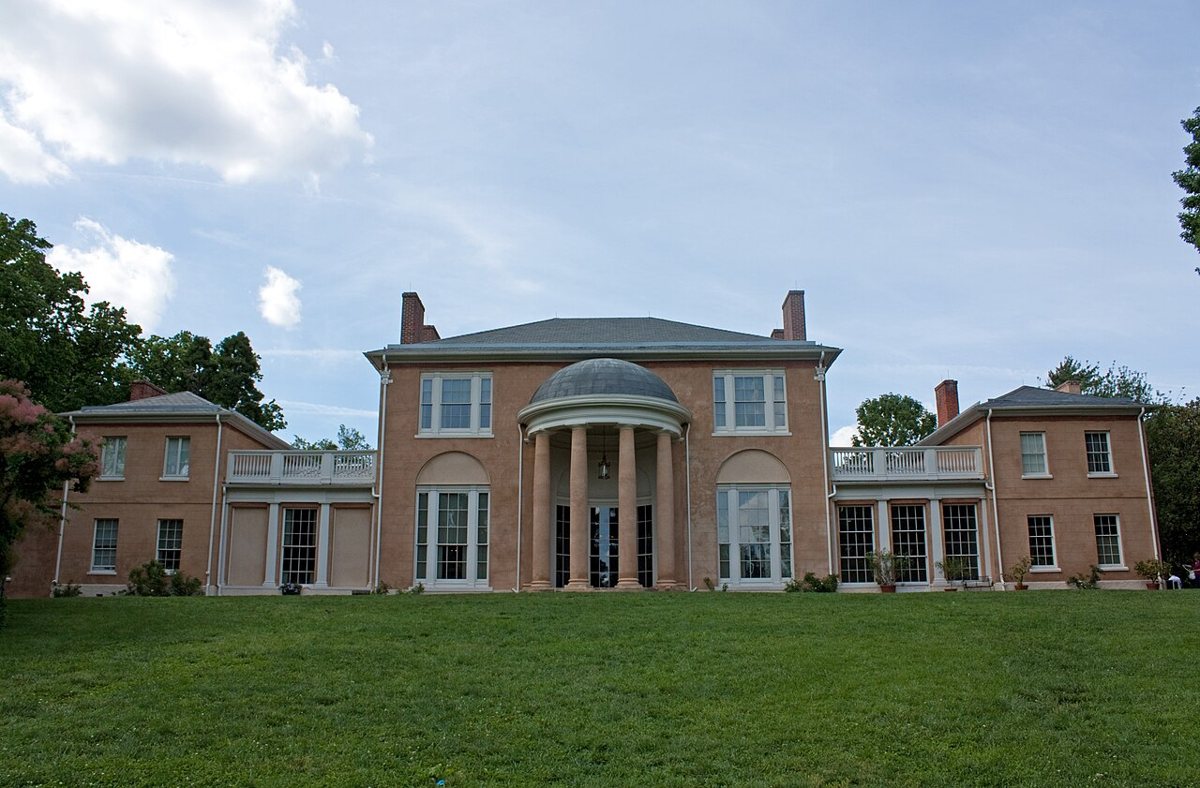
Built by Martha Washington's granddaughter and her husband, this Federal-period house stayed in the same family for nearly two hundred years, closing to the public only in the 1980s. That continuity means the furniture, letters, and household objects inside are largely original, including pieces that came straight from Mount Vernon. The boxwood garden outside is one of the oldest continuously maintained gardens in the city. Entry is by guided tour, tickets are limited, and the crowds here run noticeably lighter than at Dumbarton Oaks, which makes it the better option for anyone who wants real Washington-era history without competing for space with a tour bus, and the docents here tend to know the family's story in genuine depth. It sits a short walk from Wisconsin Avenue in the residential heart of the neighborhood.

Georgetown Public Library and the Peabody Room
The neighborhood branch library, rebuilt after a serious fire in 2007, houses the Peabody Room, a local history archive dedicated entirely to Georgetown, its photographs, maps, deeds, and genealogical records going back generations. It is free, air-conditioned, and staffed by people who take Georgetown history more seriously than almost anyone else in the city. This is the stop for a rainy afternoon or for anyone actually trying to understand the neighborhood rather than just photograph it, and the librarians will pull specific block histories if you ask. Located on R Street, an easy add-on to a visit to Dumbarton Oaks or Tudor Place nearby.

Book Hill, Volta Park, and the Residential Blocks Locals Actually Live On
North and west of the main commercial strip, Georgetown turns residential fast, and these two spots show the neighborhood that exists after the shopping bags go home and the day-trippers head back across the bridge.
Book Hill
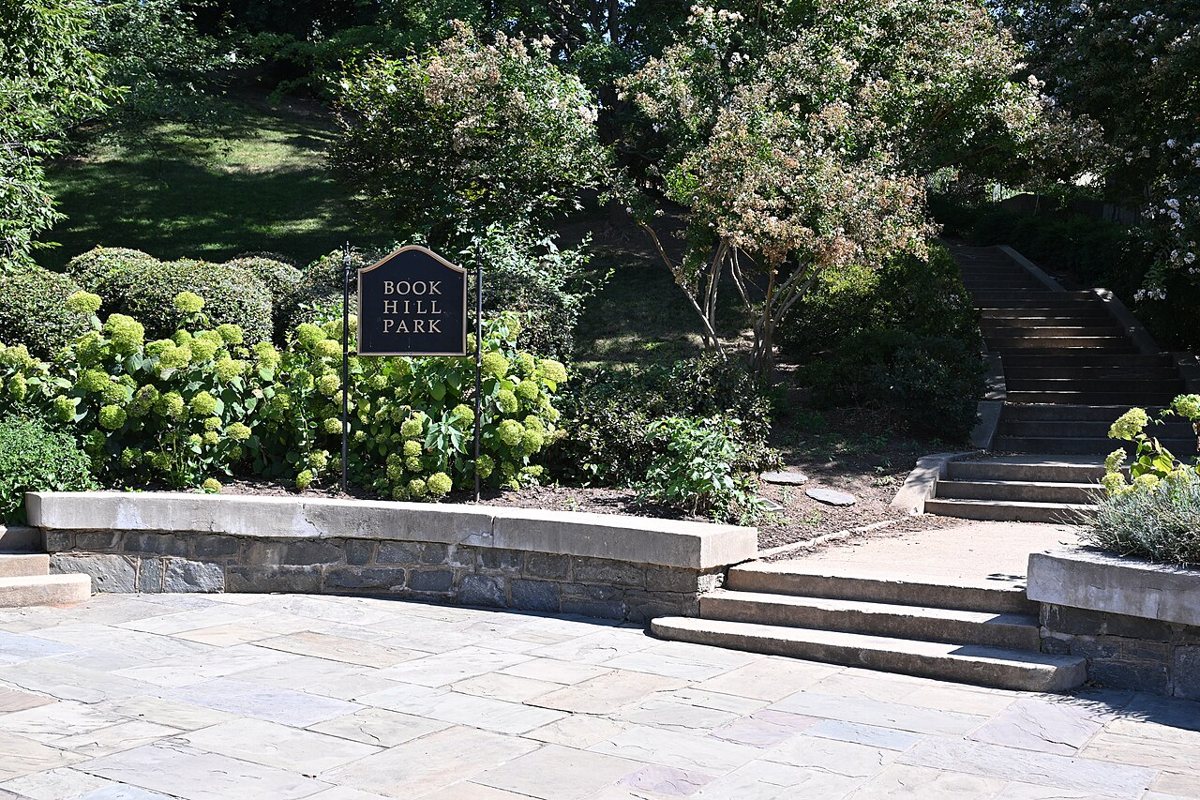
This is the upper stretch of Wisconsin Avenue, past the density of the main shopping corridor, where the pace slows and the storefronts turn into small galleries, home goods shops, and a scatter of boutiques with far less foot traffic than M Street. It backs directly into rowhouse blocks that make up some of the most expensive residential real estate in the city. Come here for a slower browse when the main strip feels overwhelming, and expect to actually get a sidewalk to yourself on a weekday.

Volta Park
A genuine neighborhood park with tennis courts, a playground, and a shaded lawn used far more by residents walking their kids to school than by anyone with a guidebook. Rose Park, closer to the water off P Street, serves a similar function with youth sports fields and a public pool in summer. Together they are the clearest evidence that Georgetown is a residential ward with thousands of people living in it, not a theme park built around old buildings. Walk through on a weekend morning and you will see soccer practice, not tourists, which is exactly the point of putting it on this list at all.
M Street and Wisconsin Avenue: Where the Shopping and People-Watching Happen
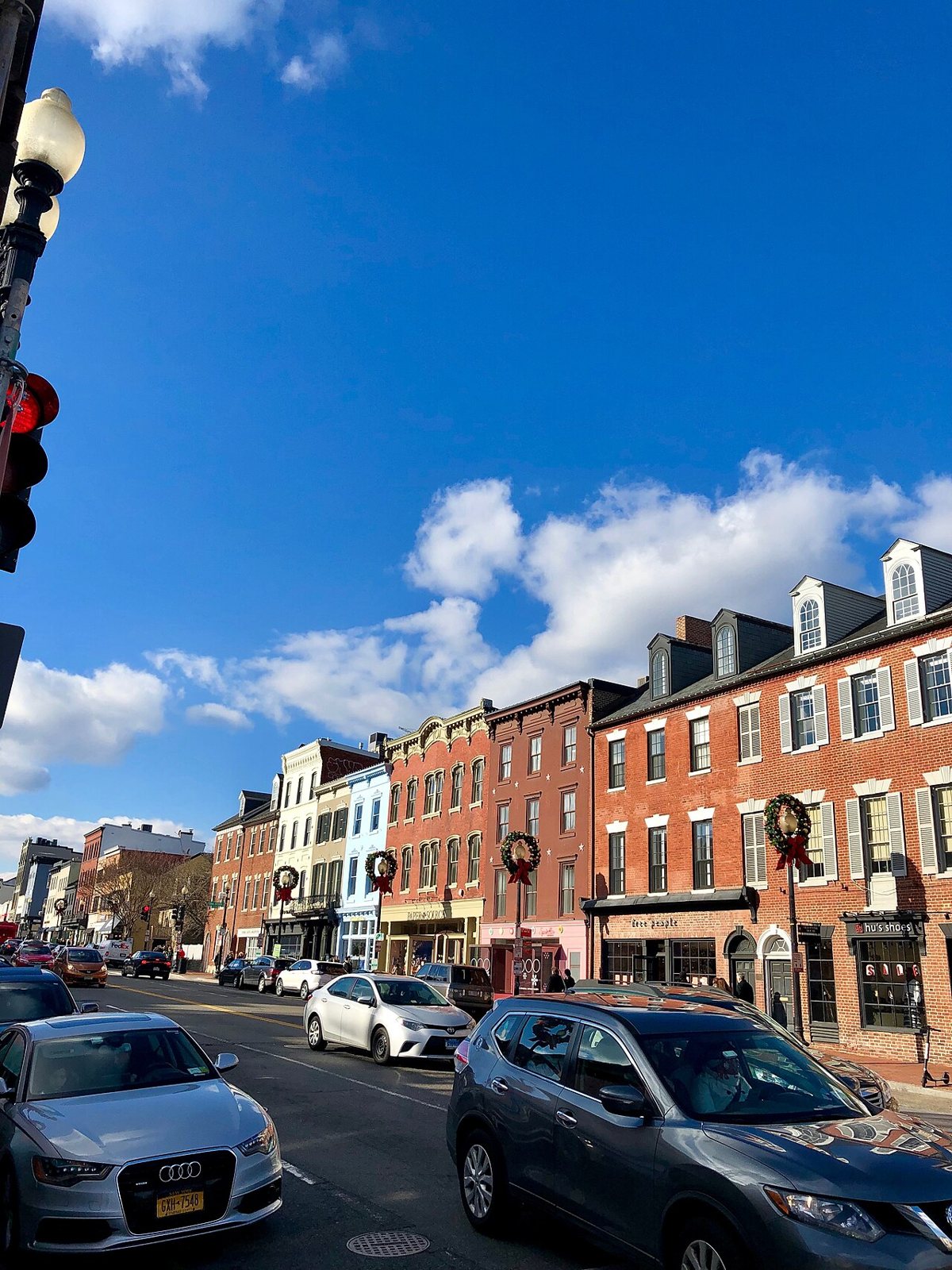
M Street NW is the commercial spine of the neighborhood, a dense corridor of national retailers, small boutiques, and a restaurant row that runs almost without a break from the university gates down toward the water. The architecture does most of the work here, brick and stone rowhouses from the 1800s with modern storefronts built into their ground floors, so even a plain shopping trip happens against a genuinely historic backdrop. Wisconsin Avenue crosses M Street and climbs north toward Book Hill, carrying its own run of shops and cafes along the way, with the crowd thinning noticeably the further uphill you go. Weekend afternoons get packed, sidewalks and all, so if you want to actually browse the boutiques along Wisconsin Avenue without fighting a crowd, go on a weekday before noon. Dining here spans casual counter spots and serious white-tablecloth rooms, sometimes on the same block, and reservations matter more on weekend nights than most visitors expect. Expect the sidewalks themselves to be part of the show on a Friday night, packed with students and residents and visitors, everyone moving at a different speed.

Getting Around: Georgetown Has No Metro Stop
Plan the logistics before the day gets away from you, because Georgetown is one of the only major DC neighborhoods without direct rail access, a gap that regularly gets debated at the ward level and has never been resolved.
- There is no Metro station in Georgetown, a fact that surprises visitors expecting Washington's rail system to reach every corner of the city. The closest stops are Foggy Bottom and Rosslyn, both roughly a twenty to twenty-five minute walk, longer across the Key Bridge in summer heat.
- The DC Circulator bus runs a dedicated Georgetown route connecting to Dupont Circle and Union Station, and it is the easiest fix for the Metro gap.
- Walking is realistic for almost everything on this list. The core of the neighborhood, campus down to the river, covers well under two miles.
- Driving in means paying for parking, and spots fill fast on weekends. Budget extra time or skip the car entirely.
- Weekday mornings are quiet across the board, the closest this neighborhood gets to feeling sleepy. Weekend afternoons bring the heaviest crowds to M Street and the waterfront, especially once the weather turns warm. Evenings shift the energy toward the harbor and the restaurant rows, where the tables outside stay full well past dark in summer.
- Free stops include the Old Stone House, the canal towpath, Georgetown Waterfront Park, Francis Scott Key Memorial Park, the university campus, the Exorcist Steps, and the Peabody Room. Paid stops include Dumbarton Oaks' garden during peak season and the Tudor Place house tour. Bring cash or a card for the Circulator, and check current hours for every historic site before you go, since seasonal schedules shift more than visitors expect.
Georgetown gets dismissed by people in other parts of the city as a tourist trap, or as an old-money bubble sealed off from the rest of Washington, and there is truth in both charges. It is among the most expensive and least racially diverse pockets in a city with a deep and distinct Black cultural history that plays out mostly east of here, in wards this guide is not about today. But writing it off entirely misses something real: this is one of the few corners of Washington where the colonial-era city, the industrial canal-era city, and the current city sit visible on the same three or four blocks. Come for the water and the history, not because it is what Washington is. It is one neighborhood in a city of eight wards, and it earns a full day, not a photo stop on the way to somewhere else. Walk the canal in the morning, sit in the university quad in the afternoon, and end at the water when the light goes gold. That is the version of Georgetown worth the trip.