Things to Do in Adams Morgan: The Local Guide
A neighborhood guide to the 18th Street strip, the park with the drum circle, and the blocks in between that most visitors rush past.
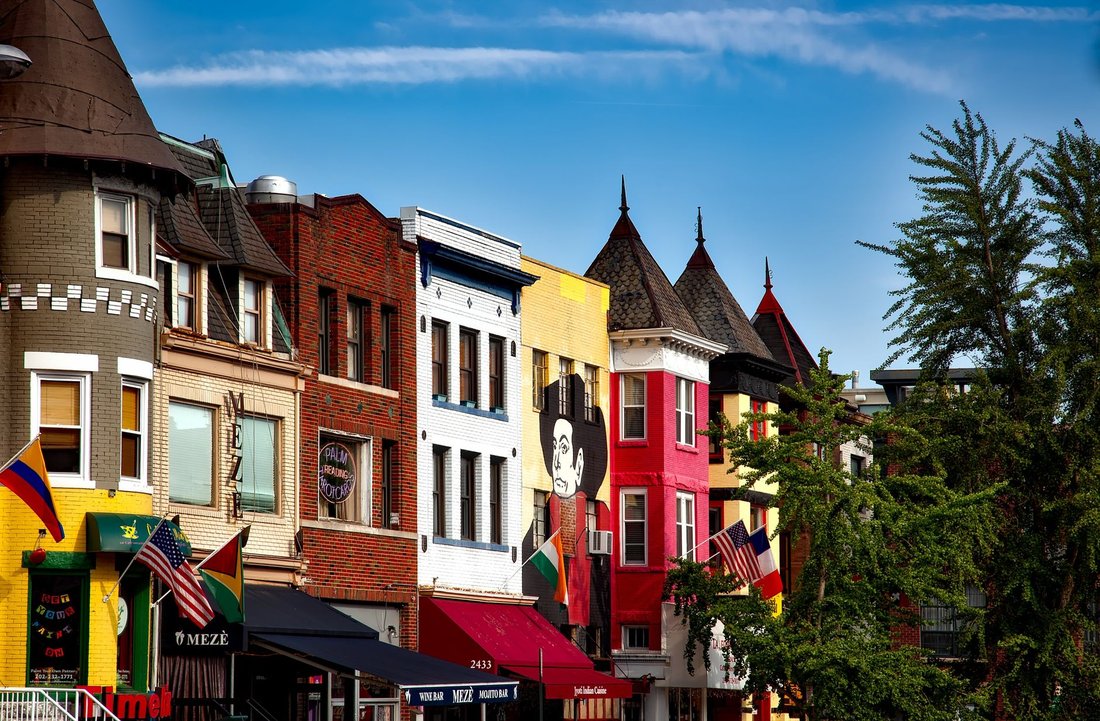
On a warm Friday evening, the first thing you notice on 18th Street NW is the crowd spilling off the narrow sidewalks and into the gutter, because the sidewalks lost that argument years ago. A line forms outside a pizza window, a guitar riff leaks out of a basement bar, and somebody in a Nationals jersey is explaining Ethiopian injera to a visiting cousin. Anyone building a list of things to do in Adams Morgan ends up back on this strip sooner or later, and the smart move is to arrive knowing the neighborhood is much more than one loud stretch of asphalt.
Adams Morgan sits in Northwest DC, tucked between Columbia Heights, Mount Pleasant, Kalorama and the edge of Woodley Park. It gets its name from two segregated public schools, Adams and Morgan, that merged in the 1950s, which tells you something about how long this place has been trying to be one neighborhood out of several. The result is one of the most international pockets of the city, with Ethiopian, Salvadoran, Middle Eastern, Latin American and American kitchens sharing the same few blocks. People who live here defend it hard, and they have earned the right.
This guide is organized the way the neighborhood actually unfolds: daytime wandering first, then the evening on 18th Street, then the late hours, then the practical details. Skip around if you like. Nothing here requires a reservation, though a few things reward a little planning.
The Best Things to Do in Adams Morgan by Day: Parks, Books and Slow Streets
Most visitors treat Adams Morgan as a night destination and miss the neighborhood's better half. Daytime here is quieter, more residential and far more local. The row houses on the side streets are some of the handsomest in the city, the dog walkers know each other by name, and the park at the eastern edge is arguably the finest public space in Northwest.
Meridian Hill Park
Meridian Hill Park, which many longtime residents call Malcolm X Park, occupies a hillside just east of 18th Street and is the single best answer to the question of what to do in Adams Morgan before dark. The design is formal and European in spirit: a long upper lawn, stone terraces, and a cascading fountain that steps down the slope in a series of basins, the longest cascading fountain of its kind in North America, according to the park's own history. It is a National Historic Landmark, and it is also a plain old neighborhood park where people read, nap on the grass and bring picnics. Walk the upper terrace first to take in the view, then follow the water downhill. One tip: the cascade is usually running in warm months, and the best light comes in the late afternoon, when the stone turns gold. The park is free and sits along 16th Street, a short walk uphill from the heart of the corridor.

The Sunday Drum Circle
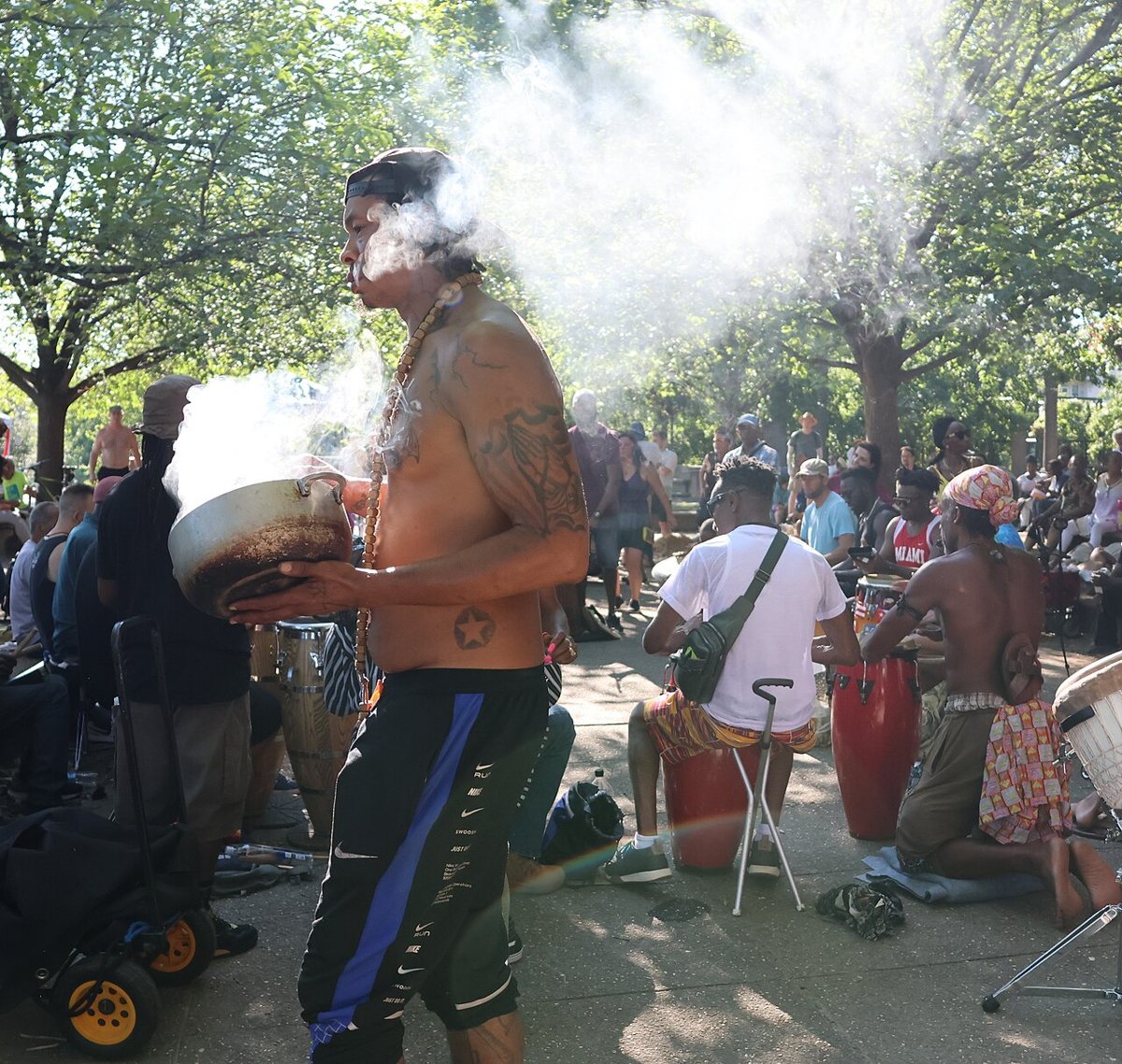
On Sundays, weather permitting, the area near the park's upper plaza fills with percussion. The drum circle at Meridian Hill has been part of the neighborhood for decades, and it is exactly what it sounds like: drummers of all skill levels, dancers, hula hoopers, vendors, kids chasing each other across the stones, and a rhythm that rises and falls without any apparent conductor. It is not a performance, so nobody is checking whether you are paying attention. Stand at the edge for a while, notice how the groove shifts, and join the dancing if you feel it. Treat the drummers and the neighbors with respect, keep your phone camera polite, and bring your own water. Because it depends on weather and the season, check community listings before planning a whole afternoon around it.
Kalorama Park and the Side Streets
Kalorama Park, on the southern edge of the neighborhood near Columbia Road and Kalorama Road, is the opposite of Meridian Hill: small, shaded, with a playground and a community feel. It is where parents, neighbors and dogs gather there as the day winds down. Pair it with a wander along the quiet streets of nearby Kalorama, where embassies and grand older homes mix with ordinary apartment buildings. 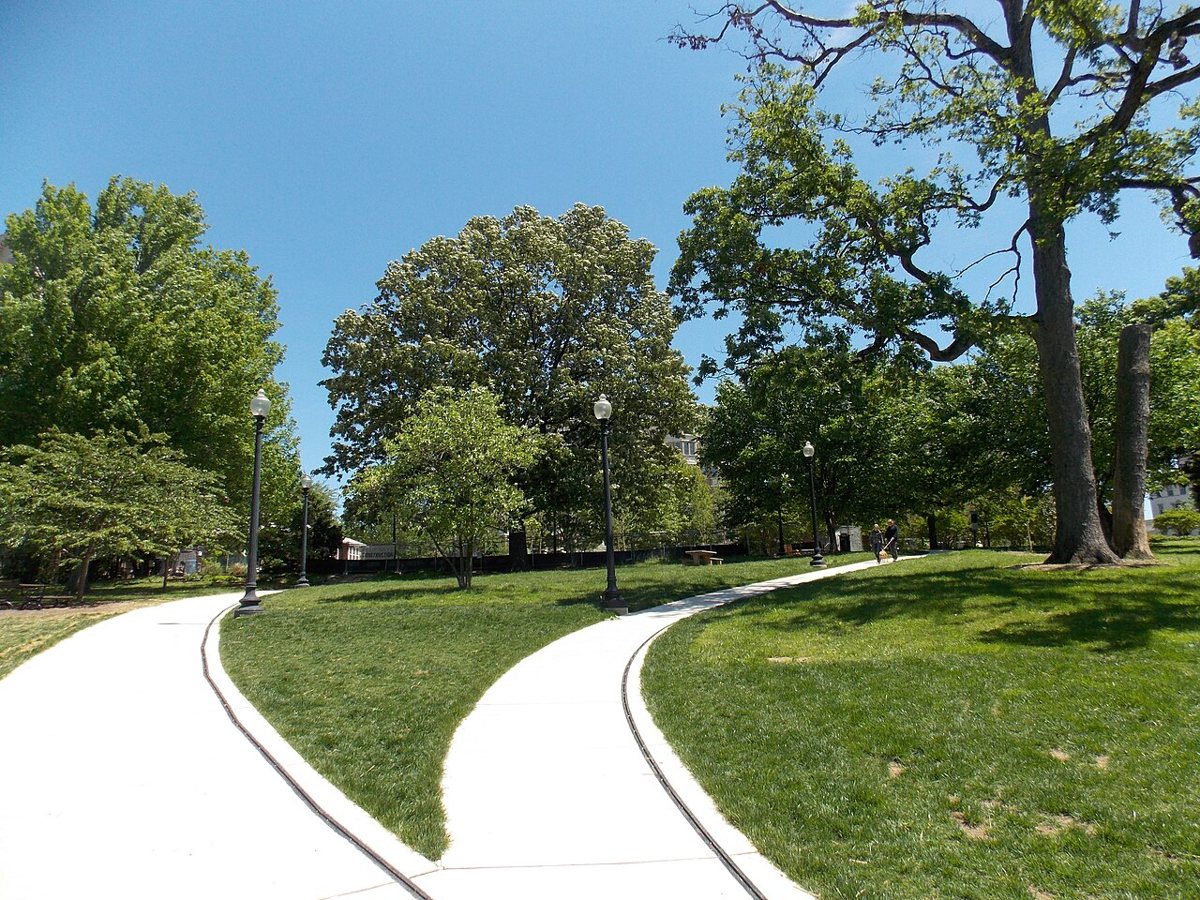

Idle Time Books
Idle Time Books, the long-running used bookstore on 18th Street, is the kind of shop that has to be browsed rather than searched. The shelves run deep, the stacks lean in a comforting way, and the stock shifts constantly as locals trade in what they have finished. Poke through the sections on DC history and politics, then look at the fiction shelves, where odd paperbacks turn up. It is a good first stop for a rainy afternoon, and a reminder that the corridor has more than bars. Check current hours before you go, since small independent shops keep their own schedules.
The 18th Street Corridor: Eating and Drinking Your Way Down the Strip
The corridor runs north from Florida Avenue past Columbia Road and beyond, and it is the commercial and cultural spine of the neighborhood. The strip is dense, noisy and fun, and it rewards a rough plan. Many people begin near the southern end and work north, which keeps you moving with the slope of the street and puts the late-night food near the end of the walk, where it belongs.
El Tamarindo and Salvadoran Roots
Adams Morgan has a deep Salvadoran and wider Central American history, rooted in the waves of families who settled here in the 1980s and gave the neighborhood much of its flavor. El Tamarindo, a longtime 18th Street restaurant, is a direct link to that story. The approachable move is to order pupusas, the thick griddled corn cakes stuffed with cheese, beans or pork and served with tangy curtido, a cabbage slaw, and a mild tomato salsa. Eat them with your hands. Ask what is most popular that day and trust the answer, then finish with a cold drink while watching the street through the window. It is a low-key counterweight to the louder places nearby.
Ethiopian Dinner, Done Right
Washington has one of the largest Ethiopian communities outside Africa, and Adams Morgan is one of several places where that heritage shows up on the plate. The most famous concentration of Ethiopian restaurants is along 9th Street near U Street, and our guide to the Ethiopian dinner options across the city covers the whole map. Within the Adams Morgan area itself you can still find injera, the spongy sourdough flatbread, served with stews and spiced lentils for tearing and sharing. Order a mixed platter for the table, eat with your right hand, and take your time. Meals here are communal by design, so this is a better group dinner than a solo errand.
Mama Ayesha's Restaurant
Mama Ayesha's, a family-run Middle Eastern restaurant on Calvert Street near the edge of the neighborhood, has fed locals for generations and has a reputation as a quiet institution rather than a trendy destination. The menu is built around classics such as grilled meats, stuffed grape leaves, hummus and baba ghanoush, all served in a dining room that feels more like a family gathering than a restaurant. Stop in for a relaxed lunch or an early dinner, then take the short walk up to the Duke Ellington Bridge for a view over Rock Creek Park. It is a good reminder that Adams Morgan's strength is variety, not one cuisine.
Amsterdam Falafelshop
Amsterdam Falafelshop is a fixture on 18th Street and a rite of passage for late-night eaters. The concept is simple and effective: a pita stuffed with falafel and then handed over to a toppings bar, where you build the sandwich yourself from a long run of salads, sauces and pickled vegetables. Fries, with a choice of dipping sauces, are the usual companion. Go in with a plan to over-stuff the pita, since the toppings are free-flowing and the sandwich is meant to overflow. It works as a quick lunch, a pre-bar fuel stop, or a post-bar rescue, and it is one of the few places in the corridor that makes sense at every hour.
The Music and the Night: Venues, Rooftops and the Jumbo Slice
After dark, 18th Street becomes what it is famous for. The sidewalks fill, the doors of the bars swing open, and the corridor takes on the loose, slightly chaotic energy that has made the strip a rite of passage for generations of Washingtonians. A few smart choices make the difference between a good night and a frustrating one.
Madam's Organ
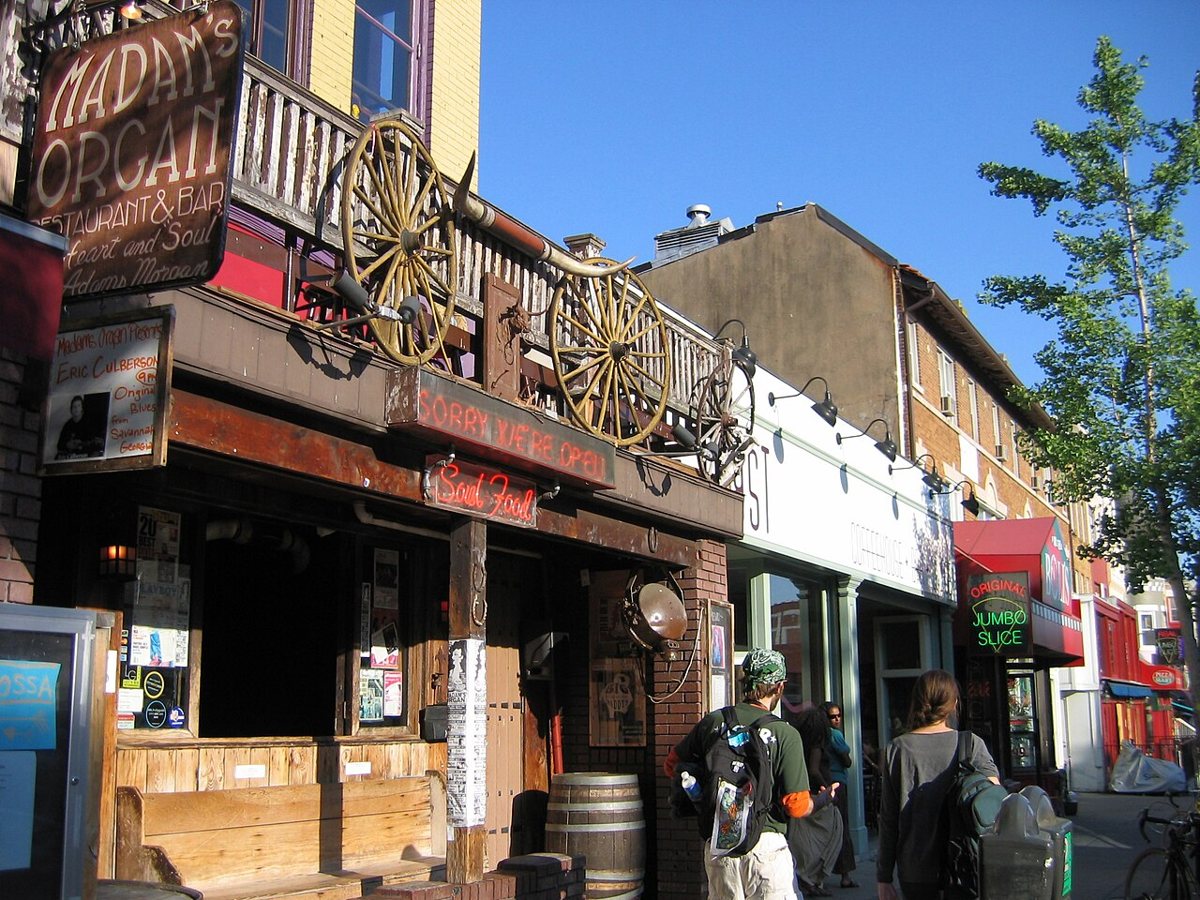
Madam's Organ is among the most recognizable names in the neighborhood: a blues and roots bar with a rooftop deck, a famously irreverent personality, and live music that has been drawing crowds for years. The bar markets itself as a place where the beer is cold and the music is warm, and that is not far off. The inside is cramped, loud and covered in memorabilia, which is part of the appeal. Go early to find a seat if you want to hear the band properly, and expect a mixed crowd of regulars, first-timers and out-of-town visitors. The rooftop deck is where you go when you want to talk, so save it for the second round. Check the venue's listings for the current schedule, since the lineup changes constantly.

Columbia Station
Columbia Station is a small jazz and blues club on 18th Street, part of an older generation of Adams Morgan music rooms where the band plays a few feet from the audience and the atmosphere is intimate rather than showy. It is a good pick when you want live music without a mob scene. Arrive early, grab a table near the stage if you can, and expect the kind of musicians who treat a small room as seriously as a big one. Because it is a compact space, it fills quickly on weekends, and the sound carries well. Confirm current schedules and cover policies before you head out.
Perry's and the Rooftop Scene
Perry's, the Japanese restaurant with a rooftop deck on 18th Street, has long been a weekend favorite for a particular kind of brunch: drag performances, a lively crowd and a view over the corridor. It is one of the best-known rooftop spots in the neighborhood, and the sushi is a legitimate reason to go beyond the show. Reservations are wise for brunch, and the deck is at its best on a clear day when the skyline is visible. If you want a calmer evening version of the same view, go on a weeknight, when the deck is quieter and the staff has more time to talk.
Jack Rose Dining Saloon
Jack Rose Dining Saloon is the neighborhood's best-known whiskey destination. The back bar holds a remarkable collection of bottles, and the staff is happy to talk through the choices for anyone who is not sure where to begin. It is also a good example of how the corridor has room for serious drinking alongside the party bars. Take the time to ask for a tasting suggestion, order something to eat, and settle in. The rooftop is a quiet counterpoint to the bar below, and the whole place rewards a slow pace. Pick one bottle to focus on rather than sampling across the whole shelf, and let the bartender guide you.
The Jumbo Slice
No account of Adams Morgan nights is complete without the jumbo slice, the slice of pizza roughly the size of a hubcap that has become the neighborhood's unofficial last stop. Several shops along 18th Street sell them, usually out of a window, and the ritual is the same everywhere: step up, point, pay, and fold the thing in half so it fits on a paper plate. The slices are big, hot and cheap by city standards, though prices shift over time, so check what is posted. Eat it standing on the sidewalk like everyone else. Insider tip: the slice tastes best in the first five minutes, so do not wander off with it. It is the closest thing the neighborhood has to a shared language, and it brings strangers together faster than any bar does.
The Calendar Draw: Adams Morgan Day and Go-Go Culture
Adams Morgan Day, the annual street festival held each fall, is one of the oldest neighborhood celebrations in the city. Blocks of 18th Street close to traffic, vendors line the curbs, and music stages go up at intersections. The festival grew out of the neighborhood's immigrant roots and still showcases the community's range, with food from many countries and acts ranging across bands and dance groups. It is crowded, loud and genuinely local. The dates shift each year, so confirm them before planning, and arrive early before the crowds peak. Take the Metro rather than driving, since street closures make parking a headache.
While you are in the mood for local culture, remember that go-go is the official music of Washington, born in the city's Black neighborhoods and still among the most distinctive sounds in American music. The percussion-heavy groove that fills the Sunday drum circle has echoes of it, and you can read more in our guide to go-go for ways to hear the real thing across the city, including in neighborhoods east of the Anacostia River where the music is deeply rooted. Adams Morgan is a wonderful place to start, but it is only one chapter of a much larger DC story.
Beyond the Corridor: The Zoo and Rock Creek
The National Zoo, a Short Walk Away
The Smithsonian's National Zoo sits in Woodley Park, a short walk north and west of Adams Morgan. It is free to enter, though some experiences may require passes, so check the zoo's official site for current rules before you go. The grounds are hilly, shaded and surprisingly beautiful, and the layout runs along a long path that winds past big animal exhibits. Go on a weekday morning to avoid the heaviest crowds and the midday heat, and wear comfortable shoes. 

Duke Ellington Bridge and Rock Creek Park
The Calvert Street Bridge, also called the Duke Ellington Bridge, spans Rock Creek Park just west of the neighborhood and offers a quiet view over the creek valley. Walk across at dusk and notice how the city noise drops away. Below the bridge, the trails of Rock Creek Park offer a real escape, with wooded paths for walking and running that feel remote despite being a few minutes from downtown. It is a good place to burn off a big meal or begin a weekend morning. Wear proper shoes, since the paths can be muddy after rain.
Practical Notes: Getting There, Timing and What Costs Nothing
Adams Morgan has no Metro station of its own, which is part of what keeps it feeling like a neighborhood rather than a transit hub. The two most common approaches are on foot from the Woodley Park-Zoo/Adams Morgan station on the Red Line, a walk of about ten to fifteen minutes depending on where you are headed, and from the U Street station on the Green and Yellow lines, a similar walk heading east and then north. Both routes include a modest hill, so wear shoes you can actually walk in. Buses, rideshares and bikes also work well. Driving is the least pleasant option, since street parking is tight and garages fill quickly on weekend nights.
Timing shapes the experience. Weekend mornings are quiet and ideal for the park, bookstore and a long breakfast. Weekday evenings suit conversation and live music. Friday and Saturday nights get crowded and loud, which is exactly what some people want and what others should avoid. If you prefer a calmer visit, go on a Sunday afternoon, when the drum circle sets the tone.
Plenty of the neighborhood costs nothing. Meridian Hill Park and its cascade are free, the drum circle is free, the National Zoo is usually free to enter, walking across the Duke Ellington Bridge is free, and wandering the side streets and murals costs only time. Food and drink can add up, so a good approach is to mix paid stops with free ones, spending on one dinner and one show while using the parks to fill the rest of the day.
Safety is mostly common sense. Keep an eye on your belongings in crowds, plan your ride home before the night gets late, and stay aware on the sidewalks near closing time. The corridor is busy and well lit, and most visitors have an uneventful night.
The Honest Verdict
Adams Morgan gets a mixed reputation among Washingtonians. Some people think of it as a rowdy strip best left to college groups on a weekend, and parts of that picture are accurate. But writing the neighborhood off for the Saturday-night version misses what makes it special. The best days here start in Meridian Hill Park, drift through a used bookstore, stop for pupusas or injera, and end with live blues on a roof. That is a day in a city of about 700,000 people, not a theme park, and it reflects the immigrant families, Black Washingtonians and longtime residents who have shaped the place.
If you have only a few hours, spend the first in the park, the second on 18th Street food, and the third at a venue that fits your mood. If you have a whole day, add the zoo and the bridge. Either way, treat Adams Morgan as a neighborhood and not a checklist. The people who live here will notice the difference, and they will usually point you to the next good thing.