Adams Morgan Neighborhood Guide: The Local Guide
Adams Morgan is the neighborhood DC sends visitors to for the bars and keeps for itself in the daylight hours, when 18th Street belongs to dog walkers and brunch lines instead of the crowd it's known for.
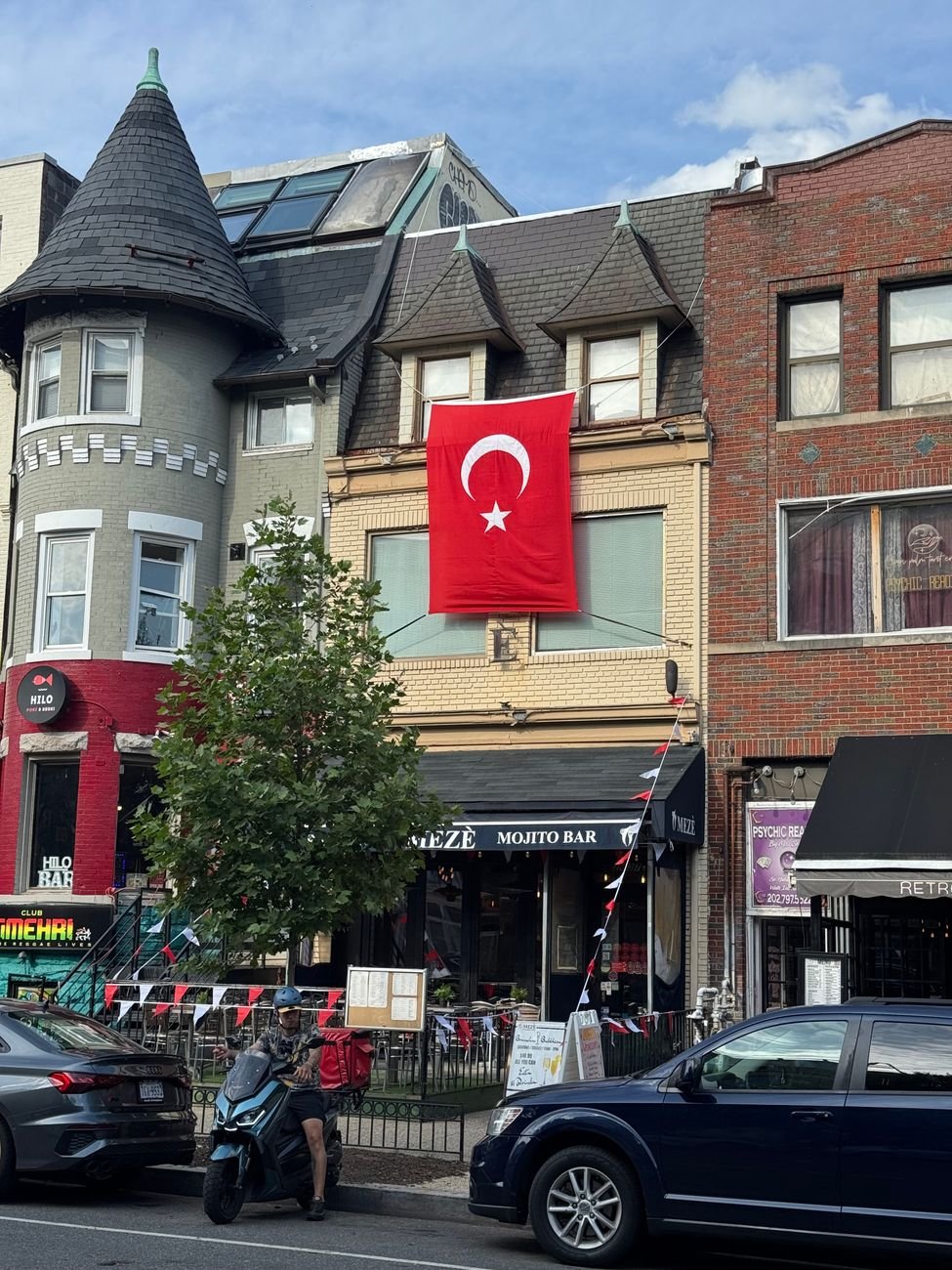
Walk 18th Street NW at eleven on a Tuesday morning and you'd barely recognize it from the version that shows up in every DC nightlife story. The sidewalks are half-empty. A restaurant is hosing down its patio from the night before. Somebody's walking two dogs and drinking coffee out of a to-go cup from a place that was slinging late-night slices twelve hours earlier. Any real Adams Morgan neighborhood guide has to hold both versions of this street in its head at once, because neither one is the whole story, and neither one is fake.
The neighborhood sits in Ward 1, wedged between Kalorama and Columbia Heights, a short walk uphill from Dupont Circle and a few blocks from the U Street corridor and Shaw. It doesn't have its own Metro stop, which matters more than it sounds like it should. The closest stations are Woodley Park-Zoo/Adams Morgan and Dupont Circle, both a real walk away, and that gap has shaped the neighborhood for decades. It's why 18th Street built up as a destination you commit to reaching rather than a stop you happen to pass through, and it's part of why the neighborhood has held onto an identity that feels older and scrappier than a lot of what's replaced it elsewhere in the city.
The Short Version of This Adams Morgan Neighborhood Guide
- 18th Street NW between Florida Avenue and Columbia Road is the spine of the neighborhood, dense with bars, restaurants, and a nightlife scene that's been running since long before most of the newer corridors existed.
- Daytime Adams Morgan is a different neighborhood entirely: quiet side streets, independent shops, brunch, and rowhouses that show the age of the place.
- Adams Morgan Day, the annual street festival, closes down the main strip and turns it into a block party that draws people from across the city, not just the neighborhood.
- Meridian Hill Park, known to most residents as Malcolm X Park, sits just east of the neighborhood and functions as its backyard, especially on weekends when the drum circle gets going.
- No Metro station sits inside the neighborhood itself, so plan around a walk from Woodley Park or Dupont Circle, or a bus.
Where Adams Morgan Fits on the Map
People who don't live here tend to lump Adams Morgan in with Dupont Circle or treat it as an extension of Columbia Heights. Neither is quite right. Dupont has more embassy money and quieter streets; Columbia Heights has newer development and a bigger footprint. Adams Morgan is smaller and denser than both, built on a steep grade that means you're always walking up or down something, with rowhouses and apartment buildings packed close enough that the neighborhood feels older than its zip code suggests. Kalorama, the residential pocket just north, is where that density gives way to bigger houses and quieter blocks.
The neighborhood's name itself is a fusion, taken from two segregated elementary schools, Adams and Morgan, that served white and Black students separately until the neighborhood pushed to integrate them. That history is part of why Adams Morgan has spent decades being cited as one of the more genuinely mixed neighborhoods in the city, even as rents have climbed.
Daytime Adams Morgan
Come back to 18th Street on a Saturday morning and the crowd is entirely different from the one you'd find at midnight. Coffee shops fill up early. The secondhand and vintage shops that have survived multiple waves of turnover open around the same time the brunch lines start forming. Side streets like Ontario Road and the residential blocks running toward Columbia Road show off the neighborhood's rowhouse stock, some of it dating back over a century, painted in the kind of mismatched colors that would look chaotic anywhere else and somehow work here.
This is also when Meridian Hill Park earns its keep. The park sits just outside the neighborhood's eastern edge, with a cascading fountain and sweeping views back toward downtown, and it's been called Malcolm X Park by DC residents for so long that the unofficial name functions as the official one. On warm-weather Sundays, a drum circle has run there for decades, predating most of the businesses currently open on 18th Street.
Adams Morgan Day
Once a year, the neighborhood shuts 18th Street to cars for its namesake festival. Vendors line the street, local restaurants set up tables outside their own front doors, and the whole corridor turns into the kind of daytime street fair that the neighborhood's nightlife reputation tends to obscure the rest of the year. It's the clearest single day to see Adams Morgan's mixed character on full display, families, college kids, and longtime residents all working the same few blocks.
18th Street After Dark
At night, the neighborhood reverts to what most people already know it for. The 18th Street strip is one of the older and denser nightlife corridors in the city, with bars stacked close enough together that a single block can hold a half dozen very different crowds. Weekend nights bring a mix of college students, longtime regulars, and people who came in from other neighborhoods specifically because Adams Morgan has never fully sanitized itself the way some other corridors have.
Late-night jumbo slice culture is practically its own institution here. Oversized pizza slices sold after the bars let out are as much a part of the ritual as the bars themselves, a tradition locals debate with more passion than the pizza probably deserves. The food scene more broadly reflects the neighborhood's mixed roots, with Latin American, Caribbean, and East African kitchens sitting alongside newer wine bars and cocktail spots. For a denser concentration of Ethiopian cooking, the restaurant row along 9th Street in Shaw is a short trip south, and a fuller guide to where to eat around Adams Morgan covers the strip itself in more detail.
Getting There and Getting Around
Because there's no Metro stop inside the neighborhood, most people arrive by bus or bike, or on foot from Dupont Circle or Woodley Park. Metrobus lines run through the corridor and are the most direct way in without a car. Once you're there, the neighborhood is compact enough to cover on foot, and the steep cross streets mean a bike ride in either direction involves real effort. Parking on weekend nights is tight enough that most regulars don't bother.
The neighborhood sits close enough to U Street and Shaw that a night out doesn't have to stay on one strip. The half-smoke counters on U Street are a fifteen-minute walk from the middle of 18th Street, and there's plenty more to do across the city once you treat the two corridors as one evening rather than separate destinations.
What Actually Makes the Neighborhood Work
This neighborhood gets flattened into a single idea more often than almost any other in DC: the bar strip, the college crowd, the late-night slice. That version isn't wrong, but it's incomplete. The daytime neighborhood, with its rowhouses, its park, and its unhurried pace, is just as real as the version that shows up after dark, and the two coexist because the neighborhood never picked one identity and dropped the other. Visit once at noon and once at midnight before deciding what you think of it. Most neighborhoods don't reward that kind of double visit. This one does.